


Why Multi-Country eSIMs Are Your Best Bet for Europe 2026
I remember my first backpacking trip through Europe, armed with a clunky Nokia and a prayer. Every border crossing meant hunting down a new local SIM, fumbling with registration forms in languages I barely understood, and praying the phone shop in some tiny Italian village like Monterosso al Mare wasn't closed for 'siesta' until 4 PM. Those days, thankfully, are long gone. For your 2026 grand tour, the multi-country eSIM is not just a convenience, it's a strategic move that saves both your sanity and your wallet.
Think about it: you land in Charles de Gaulle, hop on the RER B into the city, then spend a few days exploring Le Marais. A week later, you're on a high-speed TGV to Brussels, wandering through the Grand Place, before catching a Eurostar to London to see a show in the West End. Each country, traditionally, would demand a new SIM card. That's a minimum of three separate purchases, three different numbers to remember (or forget), and three potential activation headaches. With a multi-country eSIM, you buy one plan, install it once, and you're covered from Paris to Prague, seamlessly.
This isn't just about avoiding a few moments of frustration, it's about reclaiming precious travel time. Time that you could be spending sipping coffee at a Parisian café, admiring the architecture in Ghent, or trying to understand the London Underground map, rather than haggling for data at an airport kiosk. It's about having reliable access to Google Maps for navigating the labyrinthine streets of Lisbon's Alfama district, or quickly booking a last-minute ticket on the Deutsche Bahn (DB) app without worrying about roaming charges.
The Evolution of Travel Data: From Roaming to eSIM
For years, roaming was the only game in town for the globetrotting data user. And oh, what a game it was, usually ending with a bill that made your eyes water. I've had bills hit me for hundreds of dollars after a week in Thailand, all because I forgot to turn off data roaming on my ancient iPhone 4S (a lesson I learned the hard way in Chiang Mai). Then came the physical local SIM cards, a definite improvement, but still a logistical puzzle for multi-country trips.
eSIMs, particularly multi-country plans, are the logical next step. They eliminate the physical hassle, make switching plans a digital affair, and, most importantly for Europe, consolidate coverage. The European Union's 'Roam Like at Home' policy has certainly helped within the EU bloc, but it often has fair usage policies, and once you step outside the EU (think Switzerland, UK post-Brexit, or the Balkans), those charges can skyrocket again. A dedicated multi-country eSIM often leverages multiple local networks, giving you better coverage and more predictable costs, no matter which side of the Schengen border you're on.
The True Meaning of Seamless Connectivity
Seamless isn't just a buzzword. It means stepping off a Trenitalia train in Florence's Santa Maria Novella station and having your map app load instantly as you search for your Airbnb in Oltrarno. It means being able to call a local restaurant for a reservation without worrying about international dialling codes or prohibitive minute rates. It means not missing a beat when you're trying to figure out which ATM line to take from the airport to downtown Copenhagen for the Jazz Festival, thanks to your reliable connection. This kind of uninterrupted connectivity profoundly changes the travel experience, transforming potential stressors into minor blips.
The Hidden Costs of Traditional Data for Euro Trips
When planning a multi-country European adventure, many travellers focus on flight, accommodation, and activity costs, often overlooking the significant expense of staying connected. Traditional methods, while seemingly straightforward, often come with hidden fees and logistical nightmares that can quickly erode your budget and precious travel time.

Roaming: The Financial Trap
Ah, roaming. The default option for many, yet almost universally the most expensive. While EU regulations have made roaming within the bloc more palatable for EU citizens, those of us coming from outside often face exorbitant charges. Your home carrier might offer an 'international plan' for $10-15 a day. Sounds okay for a short trip, right? But string together two or three weeks across Italy, Austria, and Germany, and that's $70-105 per week, easily blowing past $300 for a month-long trip. And that's usually for a limited amount of high-speed data, after which speeds throttle to dial-up levels. I've heard too many stories, including a friend who got hit with a $400 bill after a quick trip through Scandinavia because she forgot to turn off data roaming (the horror of Telenor's charges!).
Local SIM Cards: The Logistical Nightmare
Buying a local SIM card in each country seems like the savvy budget choice on the surface. And sometimes, for a long, single-country stay, it is. But for a multi-country Euro trip, it quickly becomes a repetitive chore. Imagine this scenario:
- Arrival: Land in Rome, navigate to a TIM or Vodafone Italia store, wait in line, fill out paperwork (often needing your passport and address), get the SIM activated. This can take an hour or more, eating into your first day in a new city.
- Switching Countries: Travel to Vienna. Your Italian SIM won't offer good rates (if any) there. You repeat the process, finding an A1 Telekom or Drei store, another wait, another registration.
- Repeat: Head to Berlin. Find a Telekom Deutschland or O2 shop, another hour.
Each transaction costs you not just money (typically €10-€30 per SIM), but also precious time, mental energy, and the constant worry of losing tiny SIM cards. Plus, what do you do with your home SIM? Store it somewhere safe? What if you need to receive a verification code for your bank? It's a constant juggling act.
Public Wi-Fi: The Security Gamble
Relying solely on public Wi-Fi is a recipe for frustration and potential security risks. While many European cities, like Copenhagen, offer extensive free Wi-Fi in public spaces and on their Metro and S-trains, it's rarely reliable for anything beyond basic browsing. Hotel Wi-Fi can be notoriously slow, café Wi-Fi requires you to make a purchase, and airport Wi-Fi often has time limits. More critically, open public networks are a playground for cyber criminals. Accessing your banking app or sending sensitive emails on an unsecured network is a risk no savvy traveller should take, especially when enjoying a spritz in Venice's San Polo district.
How a Multi-Country eSIM Actually Saves You Money
The beauty of a multi-country eSIM lies in its elegant simplicity and, more importantly, its economic advantage. It's not just about avoiding headaches, it's about smart budgeting that keeps more euros in your pocket for gelato and museum tickets.
One Plan, One Price, Many Countries
Instead of purchasing individual SIM cards in France, Belgium, and the UK, you buy a single multi-country eSIM package. This package covers data across all included European nations for a set period and a specific data allowance. This means no more daily roaming fees, no individual SIM card purchase costs (which typically range from €10-€30 each), and no hidden activation charges. The price you see for the eSIM plan is the price you pay, making budget forecasting much easier.
| Cost Item | Traditional Roaming (3 weeks, 3 countries) | Local SIMs (3 weeks, 3 countries) | Multi-Country eSIM (3 weeks, 3 countries) |
|---|---|---|---|
| Daily Roaming Fees | $10-15/day x 21 days = $210-315 | N/A | N/A |
| SIM Card Purchase Costs | N/A | €10-30/SIM x 3 = €30-90 (~$35-105) | N/A |
| Data Plan Cost | Included in daily fee, but often limited | €15-40/plan x 3 = €45-120 (~$50-140) | $25-60 (for 10-20GB) |
| Time/Hassle Cost | Low setup, high financial stress | High, multiple store visits, paperwork | Very low, quick digital installation |
| Estimated Total | $210-315+ | $85-245 | $25-60 |
As you can see, the savings are significant. Even on the low end, a multi-country eSIM can save you close to $60 compared to buying three local SIMs. On the high end, factoring in typical roaming costs, you're looking at well over $200 in savings for a moderately long trip.
No Surprises or Hidden Fees
One of the biggest anxieties of travel data is the fear of unexpected charges. Roaming charges can appear weeks later, and local SIMs sometimes have obscure activation fees or mandatory top-ups. With a multi-country eSIM, you pay upfront for your data, and you know exactly what you're getting. There are no surprise bills waiting for you when you return home to your usual Wi-Fi network.
Data Roll-Over and Flexibility
Many multi-country eSIM providers offer flexible plans. If you run out of data, topping up is a simple digital process, often through a mobile app. Unlike physical SIM cards, where you might be tied to a specific local provider's top-up system, eSIMs offer universal top-up options. This means if your plans change, or you find yourself needing more data for streaming a crucial football match in a local pub in Rome, you're not stuck. (Though, I will say, don't rely on streaming for everything, especially if you're venturing to more remote spots like the Arctic fjords of Norway where staying connected can be a different challenge altogether.)
Choosing the Right Multi-Country eSIM Plan
Picking the perfect multi-country eSIM for your European journey isn't a one-size-fits-all affair. It depends on your travel style, your data habits, and the specific countries you plan to visit. Having navigated dozens of eSIM providers over the years, I've learned to look beyond the headline data offer.
Coverage is King: Knowing Your Route
First and foremost, check the list of included countries. Most multi-country European eSIMs cover the major EU nations like France, Germany, Italy, Spain, and the Netherlands. However, if your itinerary includes destinations outside the standard EU zone, like Switzerland, the UK (post-Brexit, remember!), Turkey, or even Iceland, you need to double-check. Some 'Europe' plans might exclude these, or include them at a higher price or with less data. For example, if you're planning to experience the Notting Hill Carnival in London, ensure your plan explicitly covers the UK.
Data Allowance: Matching Your Needs
How much data do you actually need? Be honest with yourself. Are you a heavy streamer, posting daily video updates to Instagram from every picturesque corner of Vienna's Innere Stadt? Or are you a light user, mostly needing maps, messaging, and occasional email checks? Data plans typically range from 1GB for a few days to 20GB or more for longer trips. Here's a rough guide:
- Light User (5GB for 15-20 days): Checking maps, WhatsApp, occasional social media, email.
- Moderate User (10-15GB for 20-30 days): Regular social media, some video calls, light streaming, navigation, ride-sharing apps (like Bolt in Lisbon or Free Now in Dublin).
- Heavy User (20GB+ for 30+ days): Frequent streaming, uploading large files, working remotely, constant video calls.
Remember, you can always top up if you run out, but it's often more cost-effective to buy a slightly larger plan upfront if you're on the fence. (Don't be like me, frantically topping up 1GB at a time while trying to find my way out of Rome's Termini station at rush hour!)
Validity, Duration, and Flexibility
eSIM plans come with validity periods, typically 7, 15, or 30 days. Match this to your trip length. If you're travelling for 25 days, a 30-day plan makes more sense than two 15-day plans. Also, consider the activation window. Some plans activate immediately upon purchase, others when you connect to the first network. Understand this to avoid wasting days of your plan before your trip even properly begins.
| Feature | Consideration for Your Trip | Why it Matters |
|---|---|---|
| Included Countries | Does it cover ALL your destinations (EU, UK, Switzerland, etc.)? | Avoids needing extra SIMs or roaming for specific countries. |
| Data Allowance | How much do you realistically use per day/week? (Maps, social, video calls) | Too little means frequent top-ups, too much is wasted money. |
| Validity Period | Does it match or exceed your trip duration? | Ensures continuous coverage for your entire journey. |
| Network Speed/Type | Does it support 4G LTE or 5G in your destinations? | Faster speeds for navigation, streaming, and work. |
| Top-Up Options | Is it easy to add more data if needed? | Flexibility if your data usage is higher than expected. |
Provider Reputation and Support
While I can't name specific brands directly, it's always wise to choose a provider with a solid reputation for reliable service and good customer support. Look for reviews that mention network stability in various European countries and the ease of getting help if you encounter an issue. A reliable provider should also offer multi-carrier support, meaning they can connect to several local networks in each country, improving your chances of always having a signal, even in a dense urban area like Berlin's Kreuzberg or a more rural part of Tuscany.
Setting Up Your Multi-Country eSIM: A Step-by-Step Guide
One of the greatest advantages of an eSIM is the ease of installation. No more fiddling with tiny paperclips to open the SIM tray, no more losing your home SIM in the bottom of your backpack. The whole process is digital, and typically takes just a few minutes.
Purchasing Your eSIM
The first step is, of course, buying your eSIM plan. You'll do this online before you even leave home. For example, if you're planning to buy an eSIM for Europe, you can browse plans that cover multiple countries, selecting the data allowance and validity period that suits your itinerary.
Installation Process
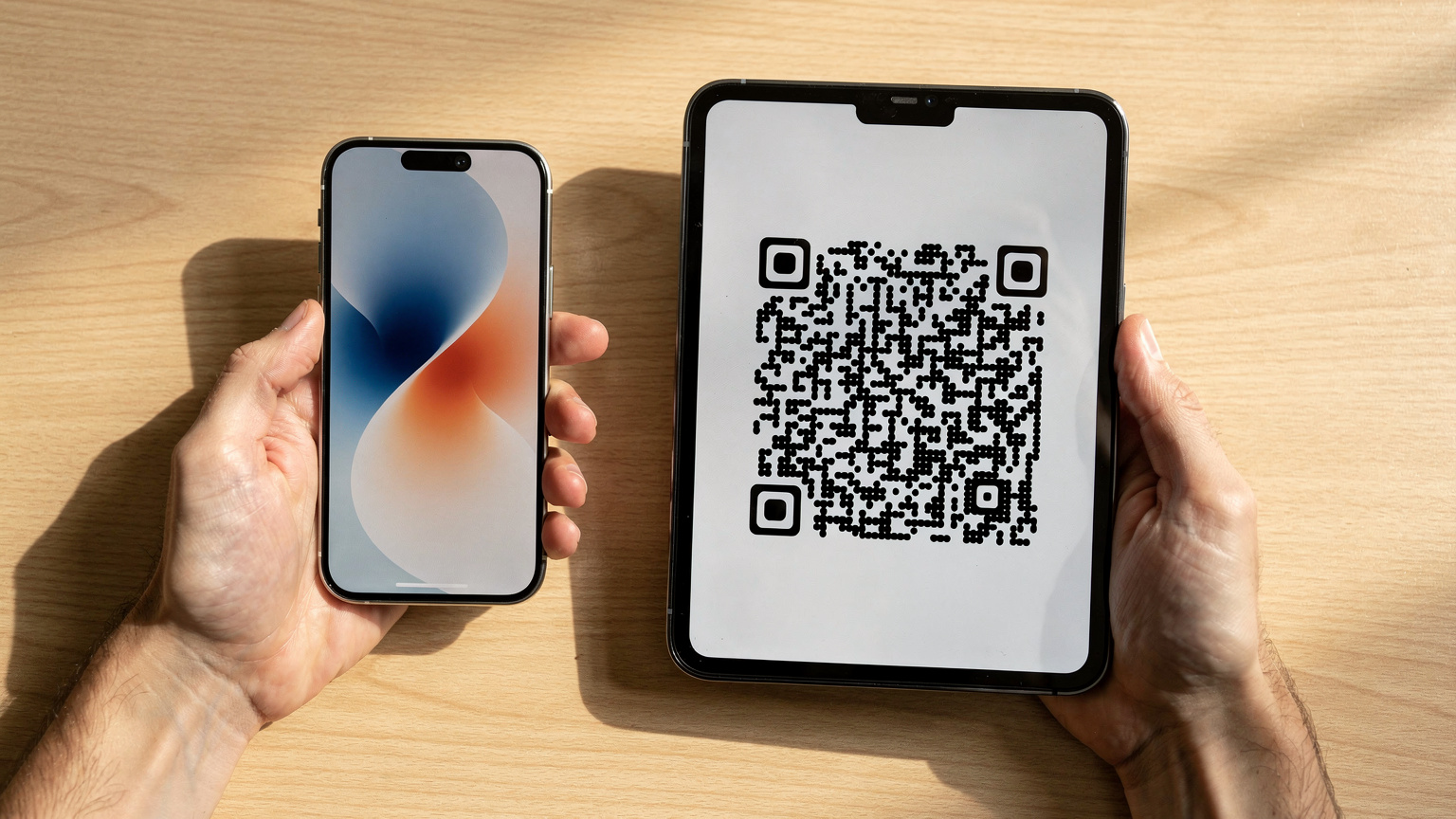
Once you've purchased your plan, you'll receive a QR code via email. This QR code is your key to connectivity. Here's how to install it on most modern smartphones (like an iPhone or Android device):
- Before You Leave: It's always best to install your eSIM before you travel, ideally while you still have a stable Wi-Fi connection at home. This avoids any last-minute stress at the airport.
- Access Settings: On an iPhone, go to Settings > Cellular (or Mobile Data) > Add eSIM. On Android, it's usually Settings > Network & internet > SIMs > Add more, or similar depending on the manufacturer.
- Scan QR Code: When prompted, choose to 'Use QR Code' or 'Scan QR Code'. Hold your phone's camera up to the QR code displayed on your computer screen or another device.
- Follow Prompts: Your phone will detect the eSIM profile. Follow the on-screen prompts to activate it. You might be asked to label the eSIM (e.g., 'Travel eSIM') and choose whether it's for data only or calls/texts (most travel eSIMs are data-only).
- Keep Home SIM Active: Crucially, make sure to keep your primary home SIM (physical or eSIM) active for calls or texts if you need to receive them, but set your new travel eSIM as the primary for mobile data when you arrive in Europe.
That's it! The eSIM profile is now loaded onto your phone. It won't activate and start consuming data until it connects to a network in the covered region, so don't worry about it eating into your data allowance before you've even boarded your flight.
Activating and Managing Your eSIM Abroad
Once you land in Europe, say at Frankfurt Airport (FRA) before catching an ICE train to Cologne, your phone will automatically detect a compatible network (like Vodafone or Telekom Deutschland). Here's what to do:
- Enable Data Roaming for eSIM: Even though it's an eSIM, it still operates via partner networks, so you'll typically need to enable 'Data Roaming' for your new travel eSIM line in your phone settings. Don't worry, this won't incur extra charges with a multi-country eSIM.
- Set as Primary for Data: Go back to your phone's Cellular/Mobile Data settings and ensure your new 'Travel eSIM' is selected as the primary line for 'Mobile Data'.
- Monitor Data Usage: Most phones have a data usage tracker in settings. You can also often check your remaining data via the eSIM provider's app or website. This helps you manage your usage and top up if needed.
- Switching Back Home: When you return, simply switch your mobile data back to your home SIM in your phone's settings. You can leave the travel eSIM installed for future trips, or delete its profile if you prefer.
I've personally installed eSIMs while on the tarmac waiting to deplane in cities from Medellín to Madrid, and the process is consistently smooth. It's a far cry from the time I had to cycle through four different phone shops in Buenos Aires just to find a Movistar SIM that would work in my unlocked phone back in 2013. The eSIM truly simplifies arrival logistics.
Real-World Scenarios and Savings Breakdowns
Let's put some concrete numbers to this 'multi-country eSIM hack' with a couple of typical European travel itineraries for 2026. This isn't just theory; it's based on my own experience tracking costs over countless trips.
Scenario 1: A Classic 2-Week European Whirl
Itinerary: London (3 days), Paris (4 days), Amsterdam (3 days), Berlin (4 days)
Traditional Approach (Roaming with Home Carrier's Daily Pass):
Assuming a typical daily international roaming pass at $12/day. This pass usually gives you a few GBs per day, then throttles.
Total days: 14 days
Cost: 14 days x $12/day = $168
Traditional Approach (Local SIMs):
This trip involves the UK, France, Netherlands, and Germany. You'd need 4 separate SIMs.
UK SIM: £15 (~$19) for 10GB (e.g., Vodafone UK)
France SIM: €20 (~$22) for 15GB (e.g., Orange France)
Netherlands SIM: €15 (~$16) for 10GB (e.g., KPN)
Germany SIM: €20 (~$22) for 10GB (e.g., Deutsche Telekom)
Total SIM cost: ~$79 (plus an hour or two per country for purchase and activation)
Total: ~$79 + 4-8 hours of travel time lost
Multi-Country eSIM Approach:
A typical multi-country European eSIM for 15 days with 10GB of data.
Cost: $25-35
Savings compared to Roaming: $133 - $143
Savings compared to Local SIMs: $44 - $54 (plus saving 4-8 hours of precious travel time)

Scenario 2: A Month-Long Backpacking Adventure
Itinerary: Portugal (Lisbon, Porto, 7 days), Spain (Madrid, Barcelona, 10 days), Italy (Rome, Florence, Venice, 10 days), Austria (Vienna, 3 days)
Traditional Approach (Roaming with Home Carrier's Daily Pass):
Assuming a typical daily international roaming pass at $12/day.
Total days: 30 days
Cost: 30 days x $12/day = $360
Traditional Approach (Local SIMs):
This trip involves Portugal, Spain, Italy, and Austria. You'd need 4 separate SIMs.
Portugal SIM: €15 (~$16) for 10GB (e.g., MEO)
Spain SIM: €20 (~$22) for 15GB (e.g., Orange Spain)
Italy SIM: €25 (~$27) for 20GB (e.g., Iliad Italia)
Austria SIM: €15 (~$16) for 10GB (e.g., Magenta Telekom)
Total SIM cost: ~$81 (plus significant time and paperwork)
Total: ~$81 + 4-8 hours of travel time lost
Multi-Country eSIM Approach:
A typical multi-country European eSIM for 30 days with 20GB of data.
Cost: $40-60
Savings compared to Roaming: $300 - $320
Savings compared to Local SIMs: $21 - $41 (plus saving 4-8 hours of precious travel time and untold headaches)
"I once missed a crucial train connection from Lisbon Oriente to Porto Campanhã because I was stuck trying to activate a local SIM in Lisbon. The shop's system was down, and by the time I sorted it out, my train was gone. An eSIM would have saved me not just the cost of a new ticket, but hours of stress."
These scenarios clearly demonstrate the substantial financial and time savings offered by a multi-country eSIM. The more countries you visit, and the longer your trip, the greater the benefits become. For many, saving over $100 is significant, freeing up funds for better meals, more experiences, or simply a nicer souvenir from a market stall in Rome's Campo de' Fiori.
Navigating Connectivity Across the Continent
Europe is a continent of contrasts, from the sprawling metropolises to the remote, winding roads of the Dolomites. Your eSIM needs to keep up. Fortunately, most multi-country eSIMs leverage robust local infrastructure, providing generally excellent coverage.
Urban Centers and Major Transit Hubs
In major cities like Paris, Berlin, Rome, or Amsterdam, you can expect excellent 4G LTE and increasingly 5G coverage. Whether you're navigating the Métro in Paris, riding the BVG U-Bahn in Berlin, or catching a Vaporetto in Venice, your data should be strong enough to pull up maps, check schedules, and communicate. Most eSIMs partner with tier-one carriers (like Orange, Vodafone, Deutsche Telekom), ensuring you're on the best available networks. This is especially vital when you're trying to find a specific gate at Schiphol Airport or locate your bus stop in London Victoria Coach Station.
Rural Areas and Remote Regions
While urban coverage is usually a given, it's worth noting that even with a multi-country eSIM, some very remote areas might have spotty service, just like with any local SIM. If your trip involves hiking in the Scottish Highlands, driving through the Albanian Alps, or exploring the lesser-known islands of Greece, manage your expectations. Always download offline maps (Google Maps allows this) and important documents before venturing too far off the beaten path. (For truly remote connectivity, like on a South Pacific cruise, satellite communication often becomes the only reliable option, but that's a different beast entirely.)
Optimizing Your eSIM for Best Performance
A few simple tricks can ensure you get the most out of your multi-country eSIM:
- Check Network Selection: If you're having trouble connecting in a new country, go into your phone's cellular settings for the eSIM and try manually selecting a different available network. Sometimes one carrier might have better coverage in a specific micro-location than another.
- Restart Your Phone: The classic IT solution, but often effective. A quick restart can help your phone register with the local network properly.
- Turn Off Wi-Fi Assist: This iPhone feature can sometimes chew through cellular data in the background if Wi-Fi is weak. Turn it off when you're relying on your eSIM.
Beyond the EU: What About the Rest of Europe?
When we talk about 'Europe', it's easy to default to the EU member states. However, the continent is vast and diverse, and many popular travel destinations lie outside the EU's 'Roam Like at Home' umbrella. This is where multi-country eSIMs become even more indispensable.
The UK Post-Brexit
Since Brexit, the UK's status for mobile data has changed. While some EU carriers still offer roaming in the UK at no extra cost, many have reintroduced charges. If your European trip includes London, Edinburgh, or the Welsh coast, explicitly verify that your multi-country eSIM plan includes the UK. Most good multi-country Europe plans will, but it's a detail worth checking. I've seen travellers caught out, thinking their EU plan covered them for a quick hop to Glasgow.
Switzerland and the Balkans
Switzerland, while nestled in the heart of Europe, is not part of the EU. Its stunning mountains and pristine lakes make it a popular destination, but roaming here can be incredibly expensive. Similarly, countries in the Balkans like Albania, Montenegro, and Serbia, while increasingly popular with backpackers, are often excluded from standard EU roaming packages. A robust multi-country eSIM will typically include these regions, offering a cost-effective solution for staying connected while hiking near Zermatt or exploring the Bay of Kotor.
Turkey and Eastern Europe
For those venturing further east, to Istanbul's Grand Bazaar or the historic streets of Krakow, connectivity needs careful planning. Many multi-country eSIMs offer options that extend coverage to these areas, providing a single solution for a truly pan-European adventure. Imagine landing at Istanbul Airport and getting on the Havaist bus to Sultanahmet, your data already working, ready to guide you to your hotel. This is the convenience you pay for, and it's worth every penny when you're navigating new cities.
Always check the specific country list of any multi-country eSIM. Don't assume. If your itinerary includes non-EU countries, confirm they are covered to avoid unexpected charges. A quick check on the provider's website, or even a chat with their customer service, can save you a lot of grief.
My Personal Take on Multi-Country eSIMs for Europe
After more than 15 years on the road, from hopping between tiny islands in the Philippines to navigating the sprawling transit systems of Tokyo (JR East, you're a marvel!), I've seen data connectivity evolve dramatically. The multi-country eSIM is, without a doubt, one of the most impactful advancements for the budget-conscious, multi-destination traveller heading to Europe in 2026.
I've personally wrestled with dodgy Wi-Fi in countless hostels in Lisbon's Bairro Alto, lost my temper over slow data speeds trying to book a train ticket on the Trenitalia app, and almost missed a flight because I couldn't quickly pull up my boarding pass. The peace of mind that comes with knowing I have reliable, affordable data across borders is invaluable. It's not just about saving money, although the $100+ savings are certainly welcome. It's about reducing stress, increasing efficiency, and allowing you to immerse yourself more fully in the travel experience.
You want to be focused on finding the best pastéis de nata in Belém, or getting that perfect shot of the Colosseum, not worrying about whether your phone will connect. It's about being able to hail a Free Now taxi in Dublin, or check the ATM bus schedule in Milan, without a second thought. Multi-country eSIMs simplify the logistics of a European trip, letting you focus on the memories you're making, not the mobile bill you're dreading.
So, as you plan your 2026 European adventure, give serious consideration to a multi-country eSIM. It's a small investment that pays dividends in convenience, connectivity, and ultimately, a more enjoyable, stress-free journey across the continent.
Frequently Asked Questions
What is a multi-country eSIM for Europe?
A multi-country eSIM for Europe is a digital SIM card that allows you to access mobile data across several European countries with a single plan. Instead of buying physical SIM cards in each nation, you install one eSIM profile on your phone, providing seamless connectivity as you cross borders.
How much can I actually save with a multi-country eSIM for a European trip?
For a multi-country European trip lasting two to three weeks, you can easily save over $100 compared to using your home carrier's international roaming plan, which often costs $10-15 per day. Even against buying individual local SIMs, you save on purchase costs and significant time spent on activation.
Are multi-country eSIMs reliable in all parts of Europe?
Multi-country eSIMs generally offer excellent reliability in urban centers and major travel corridors across Europe, as they partner with leading local carriers like Vodafone, Orange, and Deutsche Telekom. In very remote or rural areas, coverage might be spotty, similar to local SIMs, so downloading offline maps is a good practice.
Can I make calls and send texts with a multi-country eSIM?
Most multi-country travel eSIMs are data-only. This means they provide internet access but typically do not come with a local phone number for traditional calls and SMS. For calls, you can use VoIP apps like WhatsApp, FaceTime, or Google Meet, which rely on your data connection.
What happens if I run out of data on my multi-country eSIM?
If you deplete your data allowance, most multi-country eSIM providers offer easy top-up options, usually through their dedicated app or website. You can purchase additional data packages digitally, and it will be added to your existing eSIM profile, allowing you to continue using data without interruption.
Do multi-country eSIMs work in non-EU countries like the UK or Switzerland?
Many multi-country European eSIM plans do include non-EU countries like the UK, Switzerland, and even some Balkan nations or Turkey. However, it's crucial to always check the specific list of covered countries before purchasing your eSIM to ensure all your planned destinations are included.